What a plantation shutter actually is
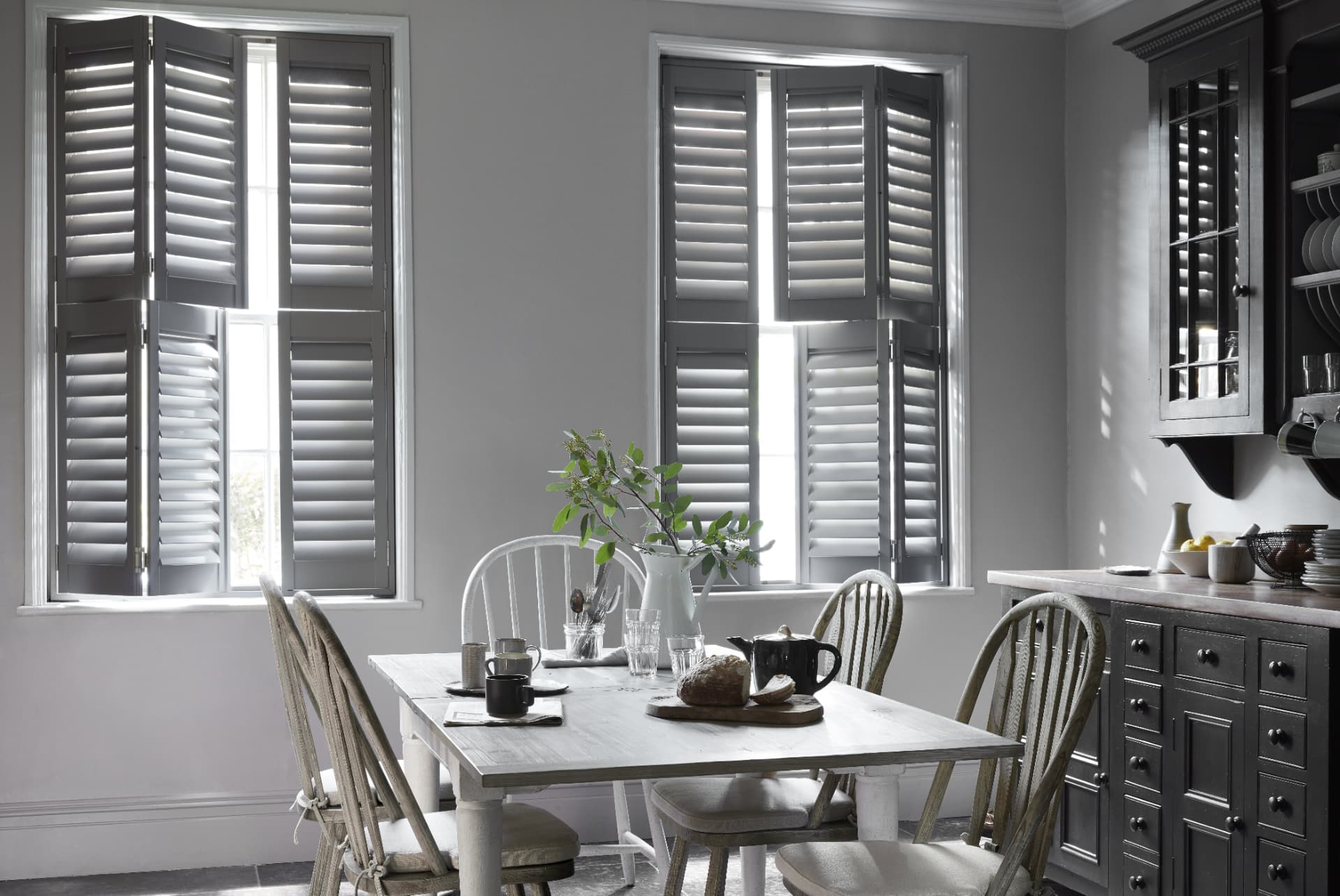
A plantation shutter is a set of solid panels, hung on hinges inside a frame that is fixed to your window opening. Each panel holds a series of horizontal louvres that tilt together, so you control light and privacy independently of whether the panel itself is open or closed.
That two stage control is the whole point of the product, and it is what separates it from a blind. The panel decides whether the window is covered. The louvre decides how much light and sight line gets through.
1. Style
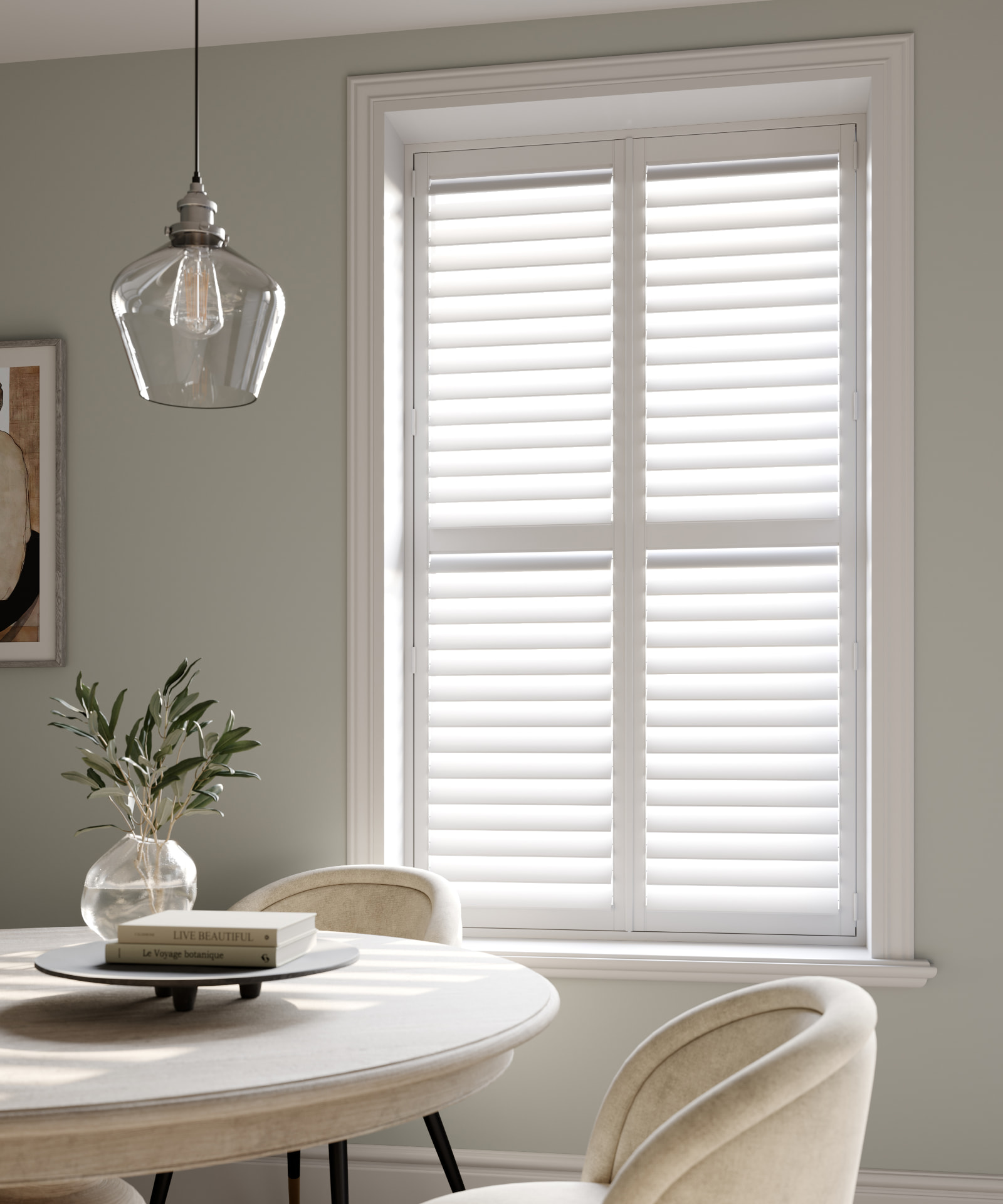
Full height is one clean run of panels covering the whole window. It is the default, the most economical and the simplest to live with. A hidden split lets the top and bottom louvres move independently without breaking the line of the panel, and a visible mid-rail does the same job with more definition.
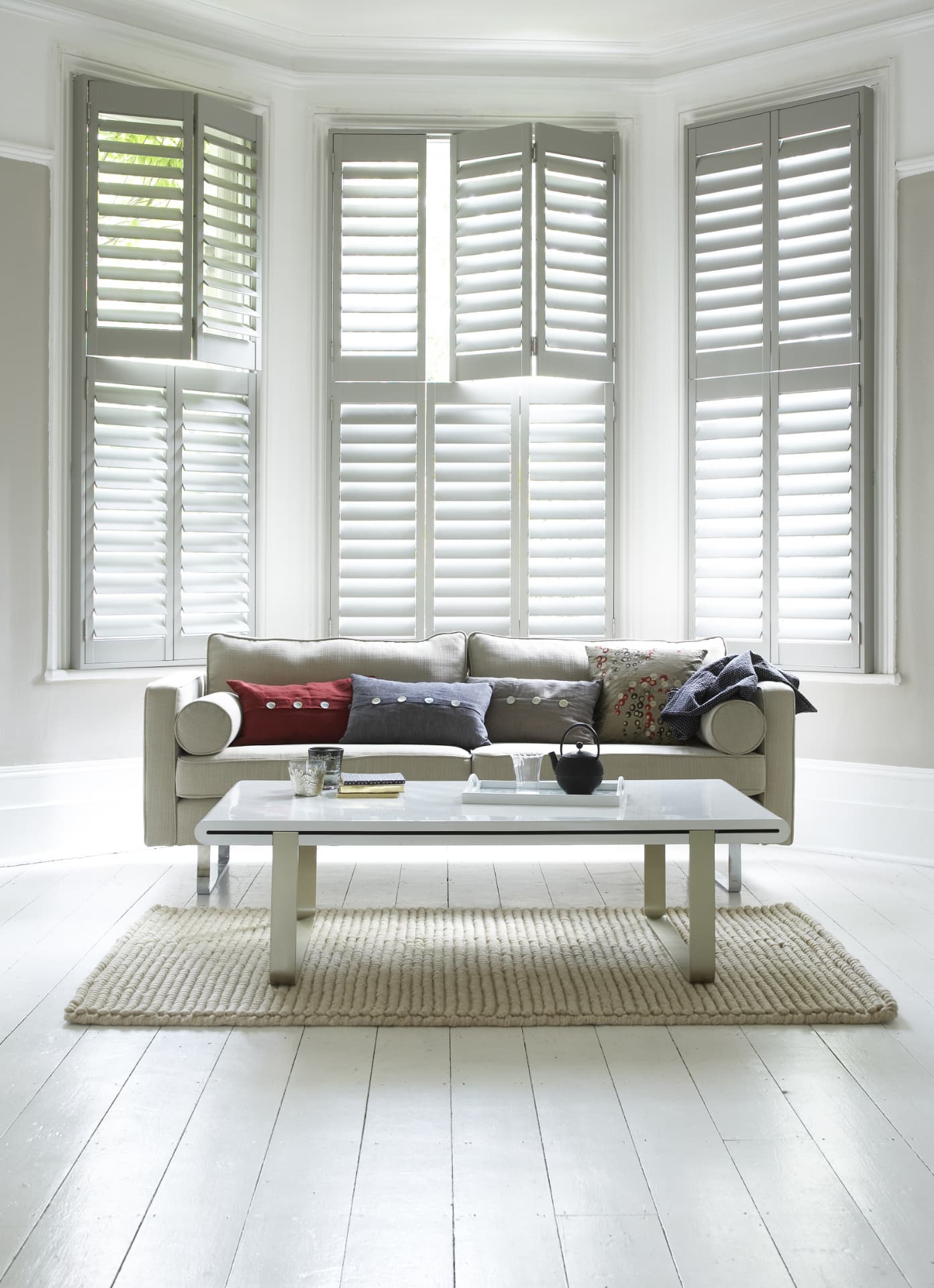
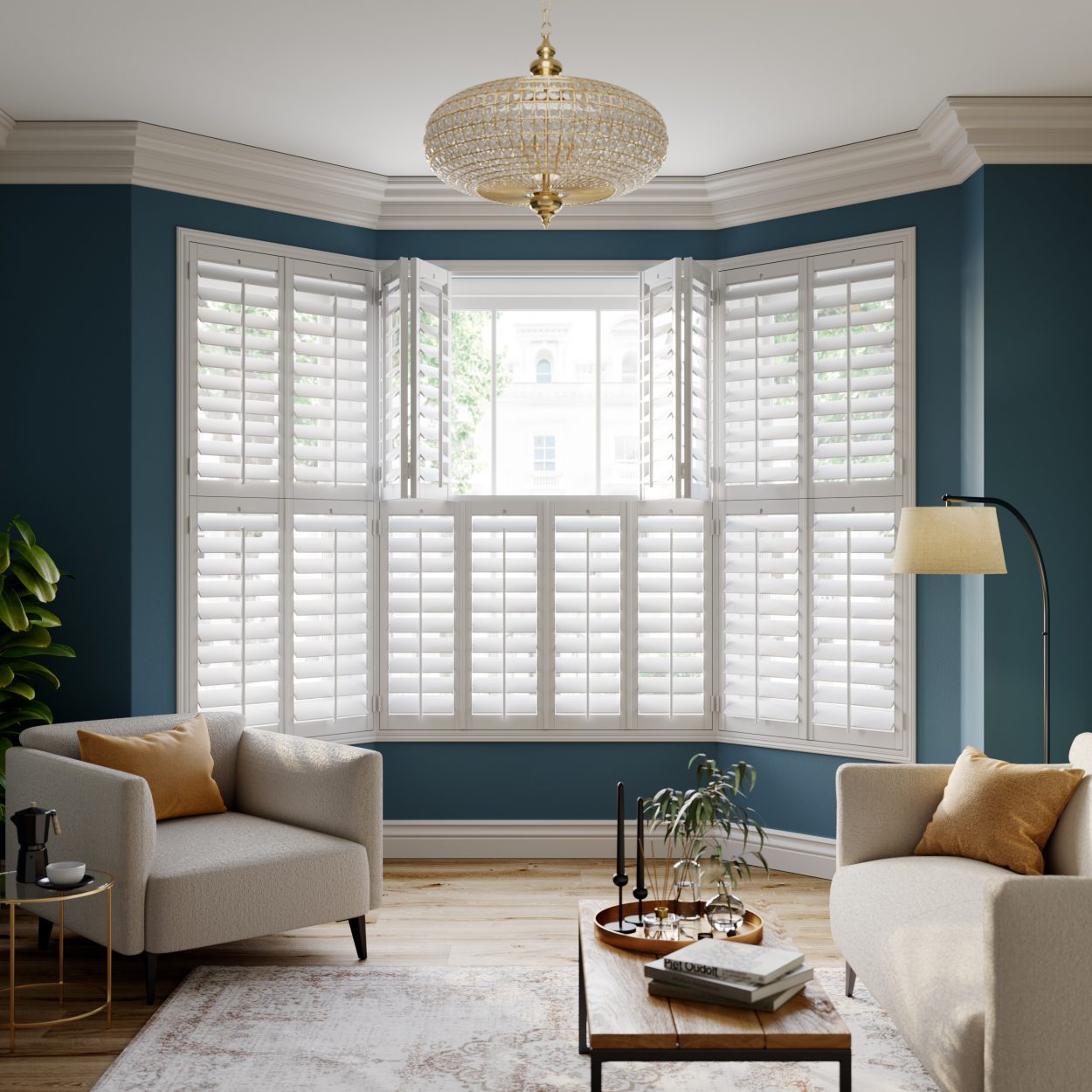
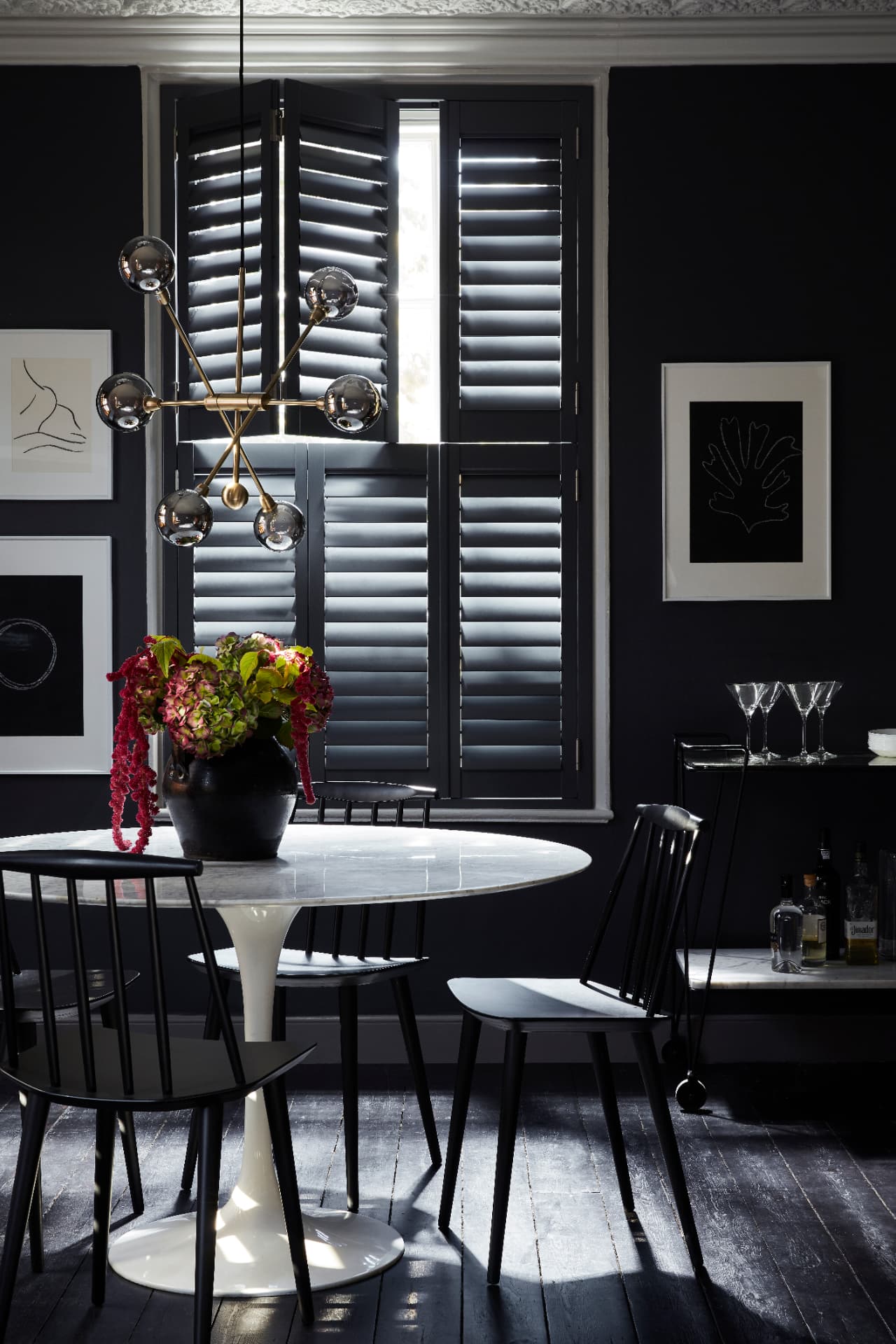
Tier-on-tier covers the window in two physically separate sections that open independently. Close the bottom for privacy, fold the top back for light and air. It suits tall Victorian and Georgian sashes particularly well and it costs more than full height on the same window.
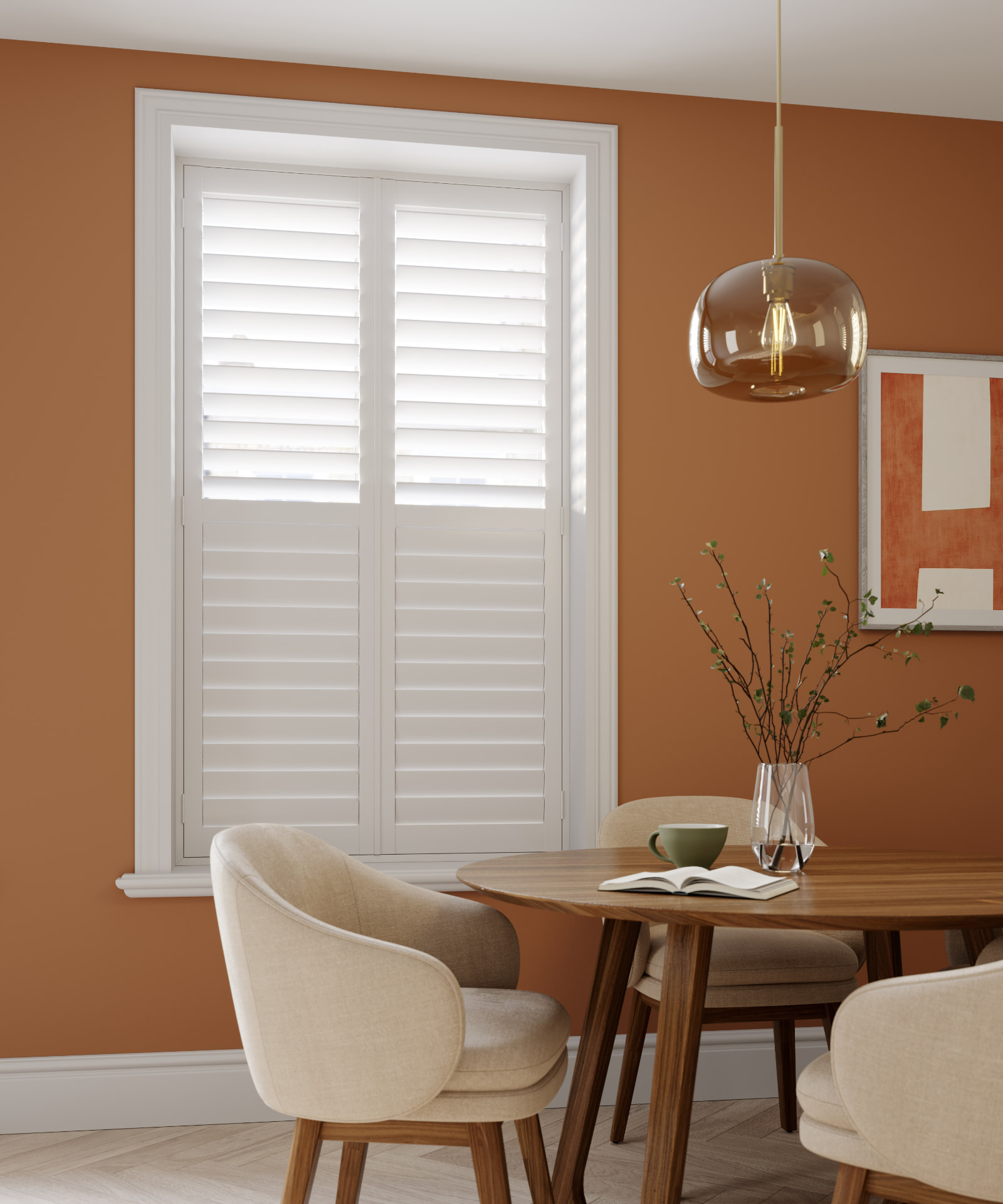
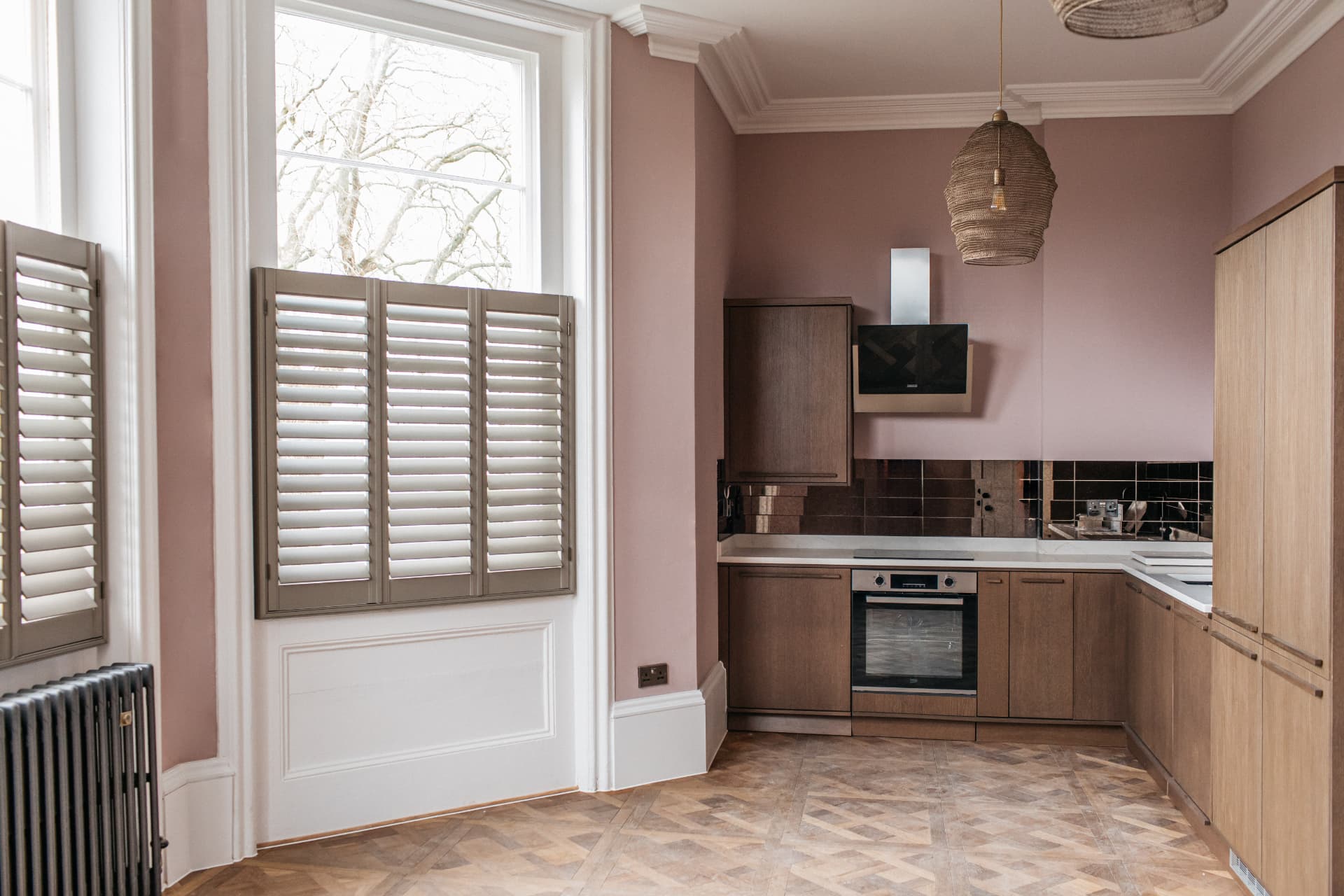
Café style covers only the lower part of the window and leaves the top open. On a street level room it solves privacy without darkening anything, and because there is less shutter it costs less.
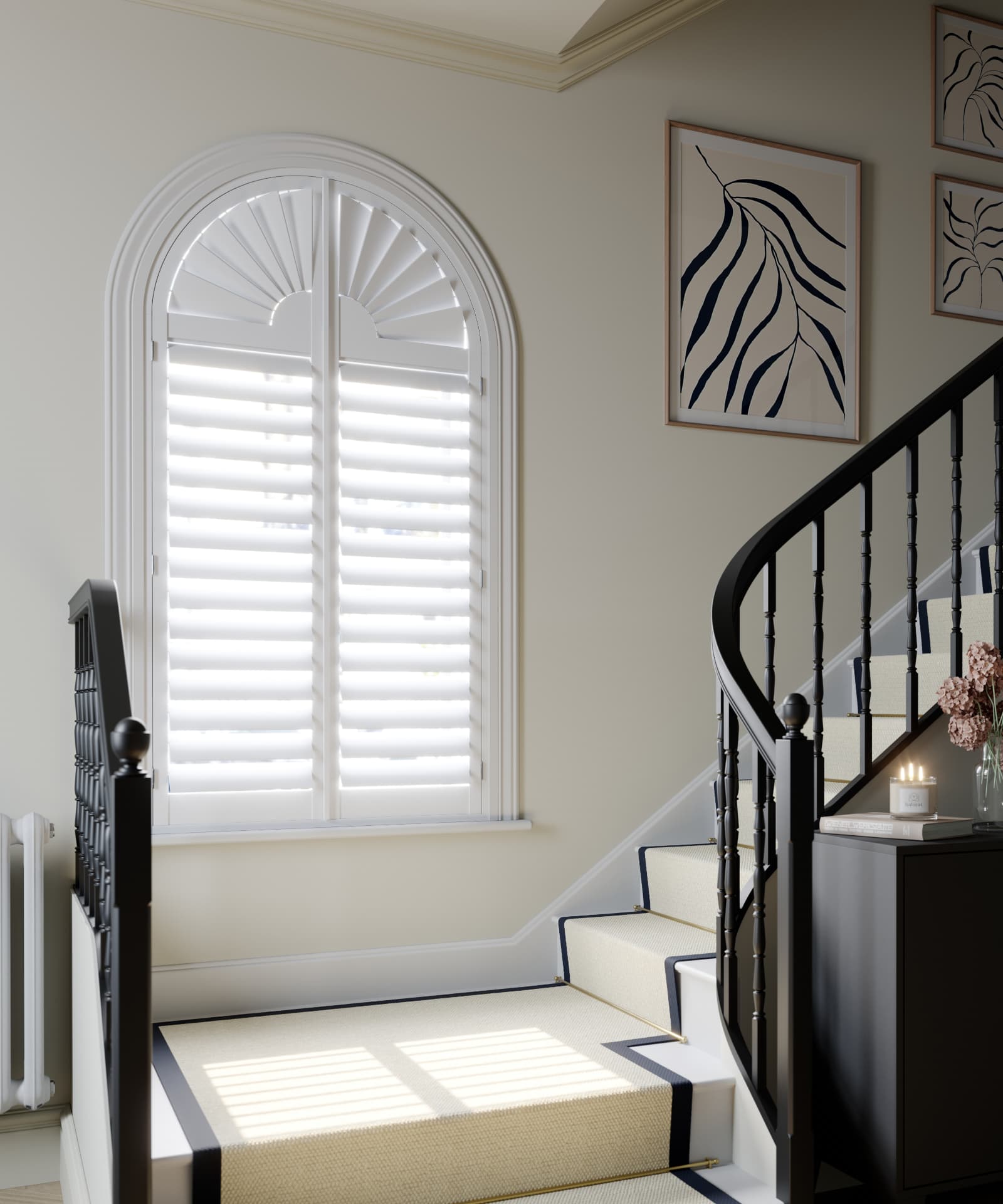
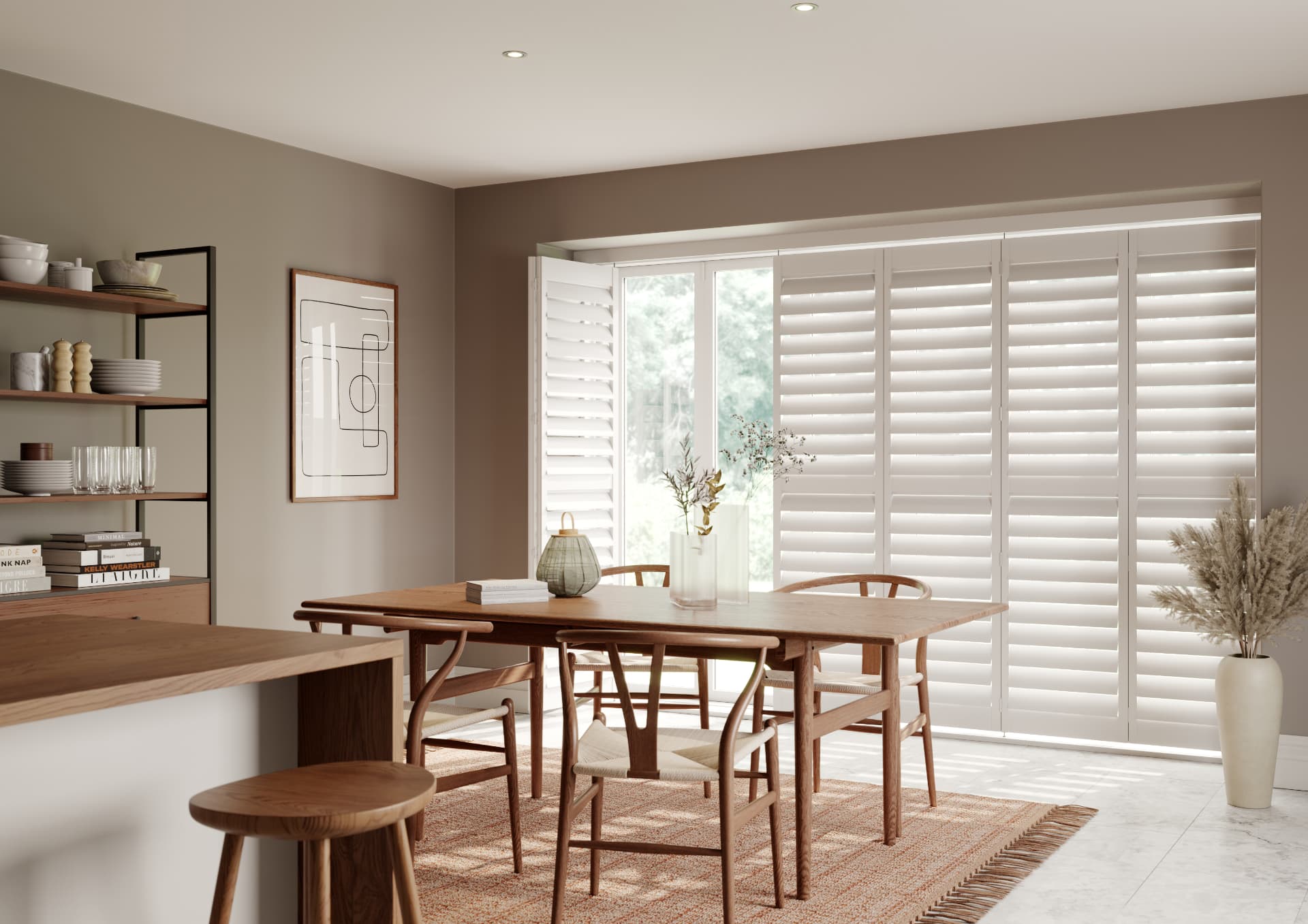
Tracked and bi-fold systems handle wide openings, patio doors and room dividers, where panels need to stack out of the way rather than swing. Shaped panels cover arches, apexes, angled staircase windows and full circles, templated on site.
The four main styles
2. Material
Paulownia is the workhorse of the painted range: light, stable and consistent, which matters when a panel is 2m tall. Basswood has a fine, even grain and takes both paint and stain beautifully. Ashwood has open grain with real character and is best shown off in a stain rather than under paint.
Hybra is an engineered core with a hardwood face, used where a panel needs strength across a wide span. Waterproof PVC is specified for bathrooms, wet rooms and anywhere with sustained humidity. Fauxwood is hard wearing and cost effective with a painted timber look.
The honest summary is that material choice is driven by environment and finish first, and by budget second. Nobody should put natural timber in a shower room to save money.
3. Louvre size
We work in 64mm, 76mm, 89mm and 114mm. Smaller louvres give a finer, more traditional appearance and slightly better control when closed. Larger louvres mean fewer of them, more glass visible when open, and a cleaner contemporary line.
76mm is the everyday choice and works across a whole house. 64mm suits smaller period windows and cottage proportions. 89mm and 114mm suit larger modern openings and tall rooms. It is genuinely worth holding samples against your own window before deciding, which is why we bring them.
4. Tilt mechanism
A front tilt rod is the vertical timber rod down the centre of the panel, moving all the louvres together. It is the classic plantation look. An offset rod does the same thing but sits in from the end of the louvres towards the hinge side.
A hidden tilt rod conceals the mechanism inside the stile, giving an uninterrupted view of the louvres. It also allows the panel to be split so the upper and lower louvres move independently, which is more useful for privacy than most people expect. A Clearview rod is a discreet aluminium rod on the window side of the panel.
5. Colour and finish
Alongside the standard whites we colour match to a specific paint reference and offer wood stains that let the grain show. Deep charcoals, soft greys, heritage greens and warm naturals all sit well in period homes.
One piece of advice from experience: look at your existing window frames before you choose. A brilliant white panel next to a slightly aged white frame will make the frame look tired. Matching the panel to the woodwork usually reads better than matching it to the walls.
6. Hardware
Hinges come in Vivid White, Natural White, Off White, Black, Brass, Antique Brass and Stainless Steel. On a white panel a white hinge disappears and a brass or black hinge becomes a deliberate detail. Neither is wrong, but it is a decision worth making rather than defaulting.
Cost, measuring and lead time
Pricing is worked out from the area of the opening, and our quotations include VAT, delivery and installation. Small windows carry a higher effective rate than large ones because the fixed costs of surveying, framing and fitting do not shrink with the glass.
You do not measure your own windows. A technical survey records every opening to the millimetre and notes where a recess is out of square, which is normal in almost every house built before 1980. That survey is what confirms the final price.
Standard lead time is around nine weeks on express shipping from the day the deposit is paid, and fitting is booked once delivery is confirmed. Payment runs 60% deposit, 30% on delivery and 10% on completion.
Installation and living with them
Fitting a room of shutters is a day at most. Frames go in first, panels are hung and adjusted on site, and the fitters take the packaging away with them.
After that, maintenance is dusting. Tilt the louvres one way, run a dry microfibre cloth along them, tilt them back and repeat. Avoid solvents, bleach and abrasive creams on a painted or stained finish.
Our guarantee runs ten years from delivery against structural defects, warping and significant discolouration. From year three to year ten we repair or replace defective parts free of charge, though labour and call-out visits are not included in that period.